Dec 17 2010

Costume Nerd: The Borgias

I’ve already mentioned Showtime will be starting up their Smexy History Hour after the The Tudors by replacing it with The Borgias, about a family so smexy they can’t even handle each other.


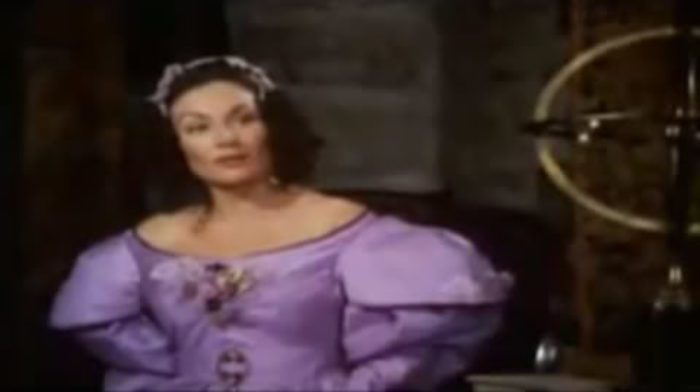
Lucrezia Borgia, sensing that the casual “So have you read Flowers in the Attic yet?” conversation with her brother has taken a turn.

But today’s I’m less concerned with the intricacies of their family tree, and more about the intricacies of their costuming. Though not a lot of photos have been released, what’s available is interesting enough that I’ve decided to just start judging the crap out of them, rather than waiting and judging the crap out of them later in one big batch.

Under the cut, let’s costume-nerd some Borgias!

Eyes front, Borgia siblings.
Continue reading


Apr 20 2010

“Riverworld” is All Wet

Monday night, SyFy premiered Riverworld, a four-hour miniseries based on the series of novels by Philip José Farmer. The novels chronicled the adventures of those resurrected after death, living on a cultivated river-planet overseen by extraterrestrial powers.

SyFy is notorious for hilariously abysmal weekly movies. Their miniseries have fared a little better from additional time and care—not that this tempers the glee with which they can throw a decent cast into a cauldron of plot soup for four hours. (Lookin’ at you, Tin Man, and Alice, and Children of Dune, and…)

With Riverworld, SyFy was more ambitious, and this backdoor pilot is a full-on narrative bouillabaisse, thick with confusion and seasoned with questionable overtones. (Mmm, soup metaphor.)

SyFy hopes the miniseries will act as a backdoor pilot to a series. A similar gambit in 2003 failed. This time, however, the network took steps to ensure an audience by recruiting old stalwarts from spec series past and present: the oft-shirtless Tahmoh Penikett and the oft-clothed Alessandro Juliani (Battlestar Galactica), the oft-expressionless Laura Vandervoort (V), the oft-game Alan Cumming (Tin Man), and the oft-British Peter Wingfield (Highlander), joined by a host of TV veterans like Kwesi Amiyaw and Jeananne Goossen.

Many of these actors will try to rise above the material. Several of these actors will have suspiciously broad accents. One of these actors will paint his face blue (again). All of them will be hamstrung by the plot.

Penikett is Matt, a photojournalist. His reunion with his girlfriend of two months, Jessie (in a nightclub full of teen extras and her middle-aged friends), goes sour when a suicide bomber blows up the club. Matt awakes on a riverbank, along with younger, hotter versions of his middle-aged acquaintances, and proceeds to gather friends and foes in his quest to find his missing girlfriend and/or save the world, whichever comes first.

Matt is alternately aided and hindered by mysterious blue-skinned overseers, a nuclear-powered steamboat captained by Mark Twain, Senegalese warrior bands, Richard Burton (no, the other Richard Burton), lightning, a terrarium, a 13th-century woman samurai, his videographer, dirigible pilots, and Francisco Pizarro. (SyFy Channel: No Plot Element Left Behind.)

There’s no point in dissecting the plot, for two reasons. Firstly, the narrative doesn’t bother to wrap up so much as set up—this may seem endless, but all four hours are just the introduction to the in-series through line. Secondly, nitpicking a plot does no good if the basic themes are flawed, and oh, are they. You have to look sidelong at a plot where the hero’s only motivation throughout is to find his girlfriend of two months, at the cost of the greater quest and many of his friends’ lives. (You dated her for two months, dude. Dial it down.) And oh heavens, what are the chances that our antagonist, Richard Burton, is also hopelessly in love with the bland Jessie? (Three hundred percent.*)

On an even larger thematic level, Riverworld repeatedly resurrects people at random locations, leaving them demonstrably isolated, bereft, and/or held hostage by Vikings. Yet Burton, out to destroy the regeneration machine, is a madman who must be destroyed at all costs. Even though Matt himself hates his omnipotent alien overlords and their mind games, he never thinks for a moment that Burton might have a salient point. (Several characters, knowing their departed loved ones are on Riverworld but still probably lost forever on its vast surface, seem confused by this dismissal of an interesting but morally-gray question. Not more confused than I, characters! Get in line.)

Not that there’s a dearth of nitpicks, either: this plot is rampant with things like food-accessing/tracking bracelets absent from persons deemed important, which in theory is a gesture of freedom but really just means we have whole conversations about how to feed Matt the Wristless. And of course, there’s the ever-popular Withholding-of-vital-information-itis that leads to Vague Conversation Syndrome and the fatal Expositiontosis.

To be fair, whenever the exposition settles down there are actually fleeting moments of solid pulp fun from a cast that seems largely to be getting along and enjoying the scenery despite occasional dialogue clunk. Unfortunately, the series’ wild unevenness makes even its good points hard to enjoy:

There are many characters of color. (That’s good!) Most of whom are suicide bombers, wisecracking sidekicks who die avoidably, all-knowing Asian monk-warriors, or Francisco Pizarro. (That’s awkward!) A woman character is portrayed in a sex-positive way! (That’s good!) Because she’s a historical hooker. (That’s awkward!) There’s a gay couple! (That’s good!) When they’re reunited as hostage and undercover conquistador, the first question is, “Ooh, can you keep the uniform?” (…really?)

To be fair, it is good that SyFy is trying to find speculative works to bring to the screen. It’s good that they’re pulling from a stable of recognizable sci-fi actors while seeding the field with some newer faces. It’s good that they’re attempting a diverse set of characters. In fact, with all that good, it’s strange to see how bad Riverworld ended up being. Here’s hoping that they keep cooking up dishes like this until they get it right. (Soup metaphor!)

* Peter Wingfield never settles for only one hundred percent.

[This piece originally appeared on Tor.com.]


Dec 30 2009

The Baker Street Irregulars: Portrayals of Sherlock Holmes

The character of Sherlock Holmes is one of the most iconic in literature, so easily recognizable that his hat alone conjures up the image of a stuffy Victorian sitting room, a faithful doctor, and a seemingly-impossible conclusion that, of course, makes sense once the clues are explained. Fans of the stories know that Holmes was a little more cutting-edge than cozy, with a great interest in forensics, a pugilist pastime, and a cocaine habit.

When bringing him to the screen, the struggle usually lies in reconciling Holmes the preternaturally-capable investigator and Holmes the unpredictable private man. And, of course, there’s no Holmes without his Watson; the way the good Doctor is handled can make or break an adaptation.

Below, I list some of the best, some honorable mentions, and one or two portrayals that, uh, build character.

In no particular order, The Best:

Basil Rathbone. After two Victorian takes, Basil Rathbone’s Holmes was transported to the modern day, where he still managed to do justice to Sherlock Holmes by way of Bogart. Rathbone’s Holmes was an unflappable man of action who never minded an armed standoff with the bad guys (which was almost always necessary, since his bumbling Watson was regularly tardy with police backup). The dialogue is more hard-boiled and the character development shallower than in other adaptations, but when Holmes’s case load includes keeping a bomb-sight out of Nazi hands, it’s hard to get away with anything flowery.

Jeremy Brett. Iconic. During the long-running series, Brett built Holmes from the ground up. From the cold, analytical investigator to the manic and often cruel private man, Brett will remain for many the ultimate and most deeply-felt Holmes. His Watsons (there were two) didn’t fare so well, often taking the part of the bumbling fool who needs rescuing and/or excessive explanation. (It’s not really a wonder that this Holmes sometimes lost his temper; with friends like Watson, who needs enemies?)

Vasiliy Livanov. Livanov faced a serious challenge in bringing one of England’s most-beloved characters to life in the age of Jeremy Brett—and he knocked it out of the park. This Holmes is repressed rather than reserved, calculating but not cold, with flashes of sly humor that outstrip any other portrayal of the character. In a canon that can make the detective seem less man than superman, his Holmes is relentlessly grounded, a master of the facts. It helps that his Watson is a solid but intelligent sidekick, who helps more than he hinders and actually converses, rather than exposits, with Holmes.

Rupert Everett . It was a bit of a scandal when Rupert Everett was cast for the BBC’s original-case take on Holmes. The case (a lustful serial killer right out of an episode of Ye Olde SVU) was a little prurient for Holmes’s usual, but Everett’s performance left nothing to be desired. He was haughty, withdrawn, easily bored and turning to drugs for recreation, intelligent but not infallible. In fact, his Watson (the excellent Ian Hart) makes several deductive leaps and is instrumental in helping Holmes solve the case. (It’s interesting to note that this adaptation has a much more equal Holmes/Watson partnership and a subplot about Holmes’s unhappiness with Watson’s impending marriage, both of which would pop up a few years later in Ritchie’s take.)

Robert Downey, Jr.  The characterization is unorthodox, the plot a downright mess, but Robert Downey, Jr. doesn’t turn in lackluster performances, and this is no exception. His gritty Holmes teeters on the brink, driven half-mad by his own abilities and frantic whenever anything (boredom, loneliness, attraction) threatens his analysis. With a streak of humor that could be delightful given any quality dialogue to work with, his Holmes promises to be an interesting take on a classic.


Honorable Mentions:

Richard Roxburgh. While not as polished a take as Everett would turn in as his replacement, Roxburgh’s one-off Holmes still managed a quiet magnetism that explains why Watson would stay friends with him despite (well-founded) frustrations. Roxburgh’s Holmes feels genuinely unpredictable; even the well-trodden Hound of the Baskervilles takes on a dangerous edge. (Ian Hart’s Watson is again outstanding, positioning himself as Holmes’s missing conscience.) Unfortunately, there’s a casting snag when Roxburgh meets up with Richard E. Grant as Stapleton, Holmes’s tactical equal—and who, the audience realizes, might make a better Holmes. (Such are the dangers of excellent casting.)

John Barrymore. Back when the movies were silent, it was even harder to get Holmes’s verbosity down to manageable levels without actually projecting the entire story. The movie itself is less than captivating, but Barrymore brings us a university-age Holmes who’s a gentler, self-aware young detective with hints of the jaded investigator he’ll become. (This Holmes makes a list of his own limitations, and smiles about them.) His Watson, sadly, is too busy introducing incredulous title cards to have much of a personality.


For Laughs:

The Great Mouse Detective: this animated musical follows the adventures of Basil of Baker Street, the sharpest mouse in London, and his sidekick Dr. Dawson. Ironically, it contains more of Arthur Conan Doyle’s original social and class commentary than most straight-up Holmes adaptations, as working-class and upper-class rodents face off. (Also, there’s a bat. I…don’t know.)

Christopher Lee. Lee’s tireless quest to portray every important character ever written for the screen made a brief pit stop at Baker Street, as Lee played a semi-retired Holmes for two TV miniseries. His Holmes, awesomely, is exactly like his Saruman (and his Dracula), so when he sits down to dinner with Morgan Fairchild as Irene Adler (!) there’s the delightful sensation that he could banish her to the top of the tower at any moment. (Sadly, he never does.)

How about it, Baker Street aficionados? Is there a particular Holmes that goes straight to your heart (or any that make you just want to stab someone)?


Dec 22 2009

I’m a nerd, is why.

One of my favorite things in the world is watching historical documentaries (generally biographies) that have extras in the background, looking historical and Very Serious. They’re never allowed to talk, of course, but sometimes they get to “Peas and carrots” their way through something as historians explain things in the foreground. It’s all extras, all the time, and it’s awesome!

The best of these I’ve seen was “The Real Jane Austen,” which aired a while ago on PBS, and was amazing because it took the framework of a talking-heads biography with actors as the talking heads. It was narrated by Anna “I always play harridans for some reason” Chancellor, and starred a list of actors I can hardly believe managed to get in the same project just to make my life easier/worse: Gillian “Stuck in a Cookson” Kearney, Jack “Also stuck in a Cookson I haven’t recapped yet” Davenport, Lucy “Becoming Jane” Cohu, Oliver “I had two lines in Lorna Doone” Chris, and Beth “Yes, I’m Kate’s sister” Winslet.

(Oh, Awesome British Actor Camp, you always know just what to say!)

The one I’m watching at the moment is about the youth of Queen Victoria, with a narrator who seems to be reading her lines off cue cards she has never seen before, and the Queen Victoria extra’s job is to look up off-camera and shake her head “No” every time we cut to her, and it’s delightful. Also it’s about history, I guess.

(If I ever have a month to myself, I should start peoplewhohangaroundindocuemtnariesdatabase.com. Best month EVER.)


Dec 8 2009

Alice, Part 2: the WTfening.

So! After I vaguely went to bat for Alice Part One, Alice Part Two aired last night, and now I feel like when a friend is visiting a city and you sort of vouch for an old college friend who lives there now as a friend introduction and they end up in a screaming food fight in a diner; totally embarrassed and sad I didn’t see it coming.

On the other hand, I called the ending in an email twelve hours before it aired, practically down to the dialogue, so clearly I saw SOMETHING coming.

Too bad it was this thing. Tor.com has the brunt of my despair, but I’m not done.

“Spoilerland.”
Continue reading